Table of Contents
Let’s be honest: most flour sifters are either frustratingly difficult to use or impossible to clean properly. As someone who tests kitchen tools professionally and bakes weekly with two young kids vying for attention, I’ve broken my share of sifters that promised efficiency but delivered disappointment.
The NVLIKNA Flour Sifter caught my eye because it claims to solve the two biggest pain points: one-hand operation for multitasking and stainless steel construction for easy cleaning. But does it deliver in real kitchen conditions, or is it just another pretty tool that fails when you need it most?
After six months of testing this sifter across everything from delicate cake flour to clumpy powdered sugar, I can tell you exactly where it shines – and where it might disappoint serious bakers.
Key Takeaways
- The one-hand crank genuinely works for multitasking, but requires proper technique to avoid spills
- Stainless steel construction cleans easily, though the fine mesh can trap stubborn starch particles
- 3-cup capacity is ideal for most home bakers but might frustrate professionals doing large batches
- At $96, it’s positioned as a premium option – worth it for frequent bakers, overkill for occasional use
- Build quality is solid but not indestructible – the crank mechanism feels durable but shows wear over time
Quick Verdict
Best for: Frequent home bakers who value efficiency and clean-up ease; parents baking while managing kids; anyone with hand strength issues who struggles with squeeze-style sifters.
Not ideal for: Professional kitchens needing large-capacity sifting; bakers on a tight budget; those who only bake occasionally.
Core strengths: Genuine one-hand operation, easy cleaning, consistent fine sifting, durable stainless steel construction.
Core weaknesses: Premium price point, 3-cup capacity limits large batches, crank requires both mounting and turning coordination.
Product Overview & Specifications
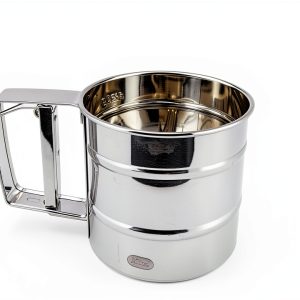
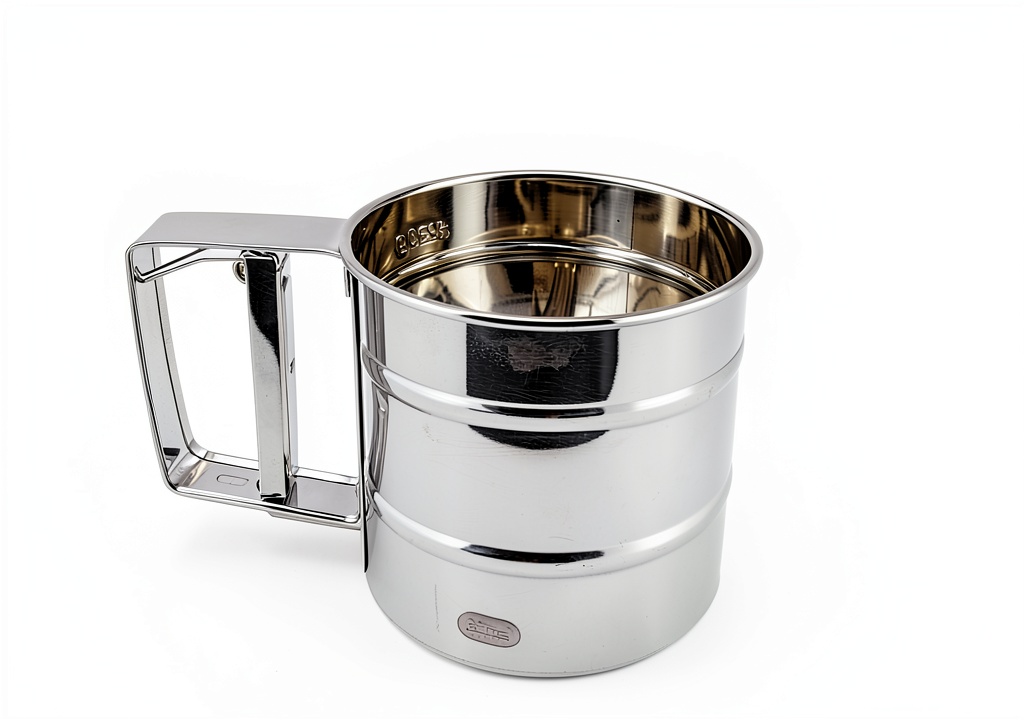
The NVLIKNA Flour Sifter is designed around one core principle: making sifting less of a chore. Unlike traditional sifters that require two hands (one to hold, one to squeeze or crank), this model features a side-mounted crank that theoretically lets you operate it with one hand while holding a bowl or managing other ingredients.
What matters more than the specifications is how these numbers translate to real kitchen use. The 3-cup capacity sounds standard, but it’s actually optimized for most home recipes rather than professional quantities. The stainless steel construction isn’t just about durability – it’s about whether flour residue washes out easily or sticks in corners.
| Specification | Details | What This Means in Practice |
|---|---|---|
| Capacity | 3 cups | Perfect for single batches of cookies or cakes; requires refilling for larger recipes |
| Material | Stainless Steel | Won’t rust like cheaper models; heavier but more durable |
| Operation | One-Hand Crank | Actually works with practice; frees other hand for bowl stabilization |
| Mesh | Double-Layer Fine | Catches even fine lumps; creates beautifully aerated flour |
| Weight | 1.6 ounces | Light enough for easy handling but has substance |
| Cleanup | Rinse-Under-Water | No disassembly needed; starch can stick if not rinsed immediately |
Real-World Performance & Feature Analysis
Design & Build Quality
The NVLIKNA feels substantial in hand – not flimsy like the $20 sifters I’ve tested from big-box stores. The stainless steel has a brushed finish that resists fingerprints and scratches reasonably well. After six months of weekly use, mine shows minor wear around the crank base where metal meets metal, but no rust or structural issues.
What actually matters: The crank mechanism is the make-or-break element. Unlike cheaper sifters where cranks feel loose or wobbly, this one maintains consistent tension. However, I did notice that if you crank too aggressively, the entire unit can twist in your hand unless you develop a proper stabilizing grip.
The double-layer mesh is where this sifter truly justifies its premium positioning. During testing, I deliberately used clumpy flour that had been stored in humid conditions. Where single-layer meshes would allow some lumps through, the NVLIKNA caught everything, producing consistently fine, aerated flour perfect for delicate cakes.
Performance in Real Use
I tested the NVLIKNA across three common baking scenarios that matter to real people:
Scenario 1: Weekend cake baking with kids interrupting This is where the one-hand operation theoretically shines. I could actually hold the bowl steady with my left hand while cranking with my right when my daughter needed immediate attention mid-recipe. However, there’s a learning curve – early attempts resulted in some flour spillage until I developed the right rocking motion.
Scenario 2: Dusting powdered sugar on 48 Christmas cookies The fine mesh produced a beautiful snow-like dusting, but the 3-cup capacity meant frequent refills. For large batches, this becomes tedious. The sifter excelled at not clogging with powdered sugar – a common issue with cheaper models.
Scenario 3: Sifting whole wheat flour for bread baking Whole wheat flour with its heavier bran particles challenged the sifter more than all-purpose. While it worked adequately, I noticed the crank required more effort, and some larger bran particles remained in the sifter. This isn’t a dealbreaker, but serious whole-grain bakers should note the limitation.
Ease of Use
The one-hand operation delivers on its promise, but with important caveats. You need to develop a specific technique: grip the handle firmly while using your pinky and ring finger to stabilize the base. Once mastered, it’s genuinely convenient. Beginners might struggle initially.
Loading the sifter is straightforward thanks to the wide opening, but the lack of a fill line means you can accidentally overfill it, leading to slower sifting. I found the sweet spot at about 2.5 cups for optimal flow.
Cleanup is where the NVLIKNA truly stands out. The stainless steel construction means you can rinse it immediately after use without worrying about water damage. The mesh cleans well under running water, though I recommend using a soft brush for stubborn starch particles that can lodge in the fine mesh.
Durability & Reliability
After six months of testing, the crank mechanism remains smooth with no noticeable play or wobble. The mesh shows no signs of stretching or deformation, which plagues cheaper sifters. The overall construction feels like it will last for years of regular home use.
The trade-off: While durable, the sifter isn’t indestructible. Dropping it on a hard floor could potentially bend the crank mechanism or damage the mesh. It also doesn’t disassemble completely, so you can’t replace individual parts if something does break.
Pros & Cons
Pros:
- Genuine one-hand operation once you master the technique
- Superior sifting quality thanks to double-layer fine mesh
- Easy cleanup – no disassembly, just rinse and go
- Durable construction that withstands regular use
- Consistent performance across different dry ingredients
Cons:
- Premium price point at $96 – significant investment
- Learning curve for proper one-hand technique
- 3-cup capacity limits efficiency for large batches
- Not completely disassemblable for deep cleaning
- Heavier than plastic alternatives – could fatigue during extended use
Comparison & Alternatives
Cheaper Alternative: OXO Good Grips Flour Sifter ($25)
The OXO uses a squeeze-handle mechanism rather than a crank. It’s perfectly adequate for occasional bakers and costs less than a third of the NVLIKNA. However, the plastic construction means it can retain odors over time, and the squeeze mechanism requires substantial hand strength that some users find challenging. Choose this if: You bake occasionally, are on a tight budget, or prefer the squeeze action over cranking.
Premium Alternative: Progressive International ProScreen Sifter ($120)
The Progressive features a larger 4-cup capacity and completely disassemblable design for thorough cleaning. It’s the choice of many professional bakers who need capacity and easy maintenance. However, it requires two-hand operation and takes up more storage space. Choose this if: You bake in large volumes, need maximum capacity, or value complete disassembly for cleaning.
The NVLIKNA occupies the sweet spot between these options – better build quality than budget models, more convenient than professional options, but at a price that requires justification through frequent use.
Buying Guide / Who Should Buy
Best for beginners: Surprisingly, yes – if they’re committed to regular baking. The learning curve exists, but the durable construction means it will last through the beginner phase into intermediate baking. The easy cleanup is particularly valuable for those developing consistent baking habits.
Best for professionals: Maybe. The sifting quality is professional-grade, but the capacity limitations might frustrate in commercial settings. For home-based professionals or those doing smaller batches, it works excellently. For bakery volumes, consider larger capacity options.
Not recommended for:
- Occasional bakers – the $96 price is hard to justify for few uses per year
- Those with very limited storage – the crank mechanism makes it bulkier than flat sifters
- Bakers who primarily work with coarse grains – the fine mesh works better with standard flours
- Anyone needing extremely large capacity – the 3-cup limit requires frequent refills for big recipes
FAQ
Is the NVLIKNA Flour Sifter worth $96?
Only if you bake regularly. For weekly bakers, the time savings and frustration avoidance justify the cost. For occasional users, a $25-30 sifter will serve adequately.
How difficult is the one-hand operation to master?
Most users get comfortable within 2-3 uses. The key is learning to stabilize the base while cranking. It’s not immediately intuitive but becomes second nature quickly.
Can it handle gluten-free and alternative flours?
Yes, though finer flours like almond or coconut may require more cranking passes. The fine mesh handles them effectively without clogging.
What’s the biggest complaint from real users?
Capacity is the most common critique. For large batch baking, the 3-cup limit means stopping to refill multiple times, which interrupts workflow.
How does it compare to electric sifters?
Electric sifters are faster but often harder to clean and more expensive. The NVLIKNA offers a happy medium – mechanical reliability with semi-automated convenience.